Built-in carpentry is often the single largest item in a Singapore renovation. Wardrobes, kitchen cabinets, TV consoles and shoe cabinets are made to measure, so they fit perfectly and make the most of every inch of space. But because they are custom-built, costs add up quickly.
In this guide, the team at Han Yong breaks down typical carpentry costs in Singapore for 2026, explains what affects the price and shares practical ways to get more storage for your money.
How Carpentry Is Priced
Most carpentry in Singapore is priced per foot run, which is the horizontal length of the piece, measured in feet. A 6-foot wardrobe at $250 per foot run would cost about $1,500 before extras.
The rate usually assumes a standard height and depth. Full-height pieces, extra-deep cabinets and special internal fittings can change the price. Countertops, glass doors, LED strips and premium hardware are often quoted separately.
Carpentry Price List for 2026
These are typical 2026 market estimates for laminate finishes:
Countertops are usually priced separately by material and length. Final prices depend on design, site conditions and the contractor’s scope.
Wardrobe Costs
The wardrobe is usually the biggest carpentry item in each bedroom.
- Swing-door wardrobes are the most cost-efficient and give full access to the interior.
- Sliding-door wardrobes cost more because of the aluminium tracks and hardware, but they save space in smaller bedrooms where swing doors would hit the bed.
- Walk-in wardrobes or open systems vary widely depending on size and fittings.
A master bedroom wardrobe of 8 to 10 feet typically costs around $2,000 to $4,000 in laminate, before premium add-ons like glass doors, LED lighting or pull-out trays. For space planning tips, read our master bedroom layout tips and the master bedroom design mistakes to avoid.
Kitchen Cabinet Costs
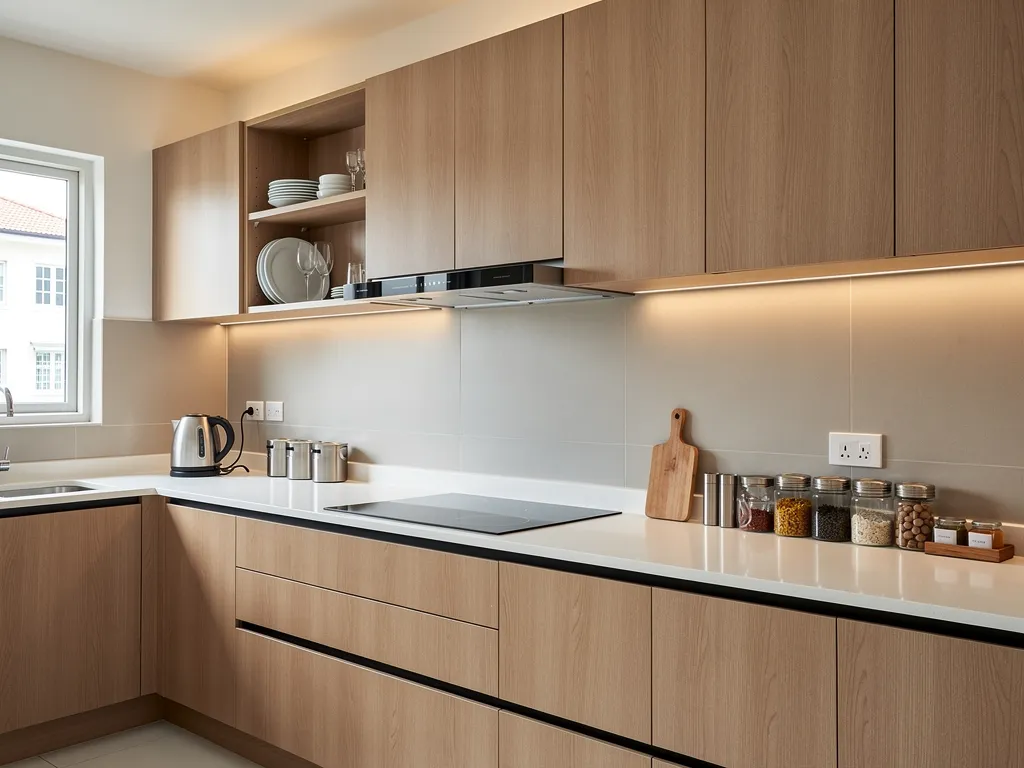
Kitchen cabinets are usually quoted per foot run for both top and bottom tiers. A typical HDB L-shaped kitchen with about 10 feet of top cabinets and 12 feet of bottom cabinets can cost roughly $4,000 to $7,000 for the cabinets alone, before the countertop, sink, hob and appliances.
Because kitchens are exposed to water and heat, it is worth choosing a moisture-resistant carcass, especially under the sink. Compare options in our guide to kitchen cabinet materials and see completed work in our kitchen renovation portfolio.
TV Console and Feature Wall Costs
TV consoles can be floor-standing or floating, with drawers, shelves and hidden cable management. Prices range from about $170 to $320 per foot run. Adding a full feature wall with fluted panels, stone-look laminates or integrated lighting increases the cost.
A floating console makes small living rooms feel more open, while a full-height feature wall creates a strong focal point. See examples in our living room projects.
What Affects Carpentry Cost?
- Length: The biggest factor, since most items are priced per foot run.
- Finish: Laminate is the most affordable. Wood veneer costs about 1.3 times more, and spray paint about 1.45 times more.
- Carcass material: Quality plywood is the common standard. Moisture-resistant boards cost more but last longer in wet areas.
- Door type: Sliding doors, glass doors and handleless designs cost more than standard swing doors.
- Internal fittings: Pull-out baskets, drawers, tall larders and magic corners add to the price.
- Hardware: Soft-close hinges, premium runners and lift-up systems are often priced separately.
- Design complexity: Curves, arches, fluting and integrated lighting require more labour.
- Who you hire: Interior design firms often add a margin on top of carpentry costs. Working with an experienced contractor directly can reduce this.
Laminate vs Veneer vs Spray Paint
For most HDB and condo homes, laminate offers the best balance of durability, design choice and value.
How to Save on Carpentry Without Cutting Quality
- Build only what you need: Use carpentry where storage must fit exactly, and choose loose furniture elsewhere.
- Go full height: Running wardrobes and kitchen cabinets to the ceiling gives more storage for little extra cost.
- Keep designs simple: Straight lines and standard doors cost less than curves and complex details.
- Use laminate for most pieces: Save veneer or spray paint for a single feature item.
- Plan internal fittings carefully: Choose the drawers and accessories you will actually use.
- Finalise designs early: Changes after fabrication starts become costly variation orders.
For more budgeting advice, see our HDB renovation cost guide and learn how to read a renovation quotation line by line.
Quality Carpentry With Han Yong
At Han Yong, carpentry is designed around how you live, from wardrobes that fit your clothes to kitchens built around how you cook. As an HDB-licensed contractor (licence no. HB-02-0289A) with over ten years of experience, we specify materials, hardware and finishes clearly in every quotation.
Our four-step process (Consult, Propose, Develop and Reveal) gives you itemised costs and a milestone payment schedule before work begins. Explore our room designer services, get style ideas from our bedroom themes for homeowners, or browse our HDB renovation projects.
Frequently Asked Questions
How much does a built-in wardrobe cost in Singapore?
A swing-door wardrobe typically costs about $200 to $320 per foot run in laminate, while a sliding-door wardrobe costs about $250 to $400 per foot run. An 8 to 10-foot master bedroom wardrobe usually costs about $2,000 to $4,000 before premium add-ons.
How is carpentry priced in Singapore?
Most carpentry is priced per foot run, which measures the horizontal length of the item. The rate assumes standard height and depth, while countertops, glass, lighting and premium hardware are often charged separately.
How much does a TV console cost in Singapore?
A built-in TV console usually costs about $170 to $320 per foot run in laminate. Full feature walls with panels, stone-look finishes or integrated lighting cost more.
What percentage of a renovation budget goes to carpentry?
Carpentry usually takes up about 28–35% of an HDB renovation budget, making it the largest single item in most projects.
Is laminate or veneer better for carpentry?
Laminate is more durable, scratch resistant and affordable, making it ideal for most homes. Veneer offers a real wood look but costs about 1.3 times more and needs more care.
How can I reduce my carpentry costs?
Build only the pieces you need, keep designs simple, use laminate for most items, run cabinets to full height for better value and finalise your design before fabrication to avoid variation orders.