Quick Answer: Most HDB ceiling leaks come from worn waterproofing in the bathroom or kitchen floor slab of the flat above. For new flats, HDB covers ceiling leaks in toilets and kitchens for five years and spalling concrete for ten, but the leak warranty ends if the floor tiles are changed. After that, upper- and lower-floor owners share repair costs for inter-floor leaks caused by wear and tear. Under HDB’s Goodwill Repair Assistance, HDB pays 50% and the two owners split the other 50%. If the upstairs owner’s renovation caused the leak, that owner usually pays in full. Roof leaks go to the Town Council, and disputes can go to mediation or the Community Disputes Resolution Tribunals.
Few things cause more friction between neighbours than a ceiling leak. A brown stain appears in your bathroom ceiling, paint starts peeling, and soon you’re knocking on the door upstairs. Understanding who is responsible, and how leaks are properly fixed, makes the process much smoother.
In this guide, the team at Han Yong explains the causes of HDB water seepage, who pays for what, the assistance HDB offers and the repair options available.
Common Causes of Water Seepage and Ceiling Leaks
- Worn waterproofing in the floor slab: The main cause. The membrane and screed in bathroom and kitchen floors wear down over time, especially in flats over 20 years old.
- Poor renovation work upstairs: Hacking tiles without re-waterproofing, or a damaged membrane.
- Leaking concealed pipes: Water supply or waste pipes in the floor or walls.
- Failed floor trap seals: Gaps around the floor trap or pipe penetrations.
- Roof deterioration: For top-floor units, the leak usually comes from the roof.
- External wall seepage: Rain penetrating cracks in the external facade.
Signs of Water Seepage
- Water marks or stains extending from the ceiling down the wall
- Peeling paint, bubbling plaster or mould on the ceiling
- Dripping water during or after the upstairs neighbour showers
- Damp skirting or walls near bathrooms
- Cracks in the ceiling or falling pieces of concrete (spalling)
Take dated photos and videos as soon as you notice a problem. They help HDB, the Town Council and your neighbour understand the issue.
Who Is Responsible? A Quick Guide
HDB’s Goodwill Repair Assistance (GRA)
For inter-floor ceiling leaks caused by wear and tear, HDB offers Goodwill Repair Assistance:
- Cost sharing: HDB co-pays 50% of the repair cost. The upper- and lower-floor owners share the remaining 50% equally.
- Investigation: HDB inspects the flats to find the source and cause of the leak, then arranges the repair if it falls within the scheme.
- Scope: It covers the floor slab between the flats only. Damage to fixtures such as carpentry, lighting and shower screens must be settled between the owners.
- Exclusions: If the leak was caused by the upstairs owner’s renovation, or comes from a faulty pipe within a flat, GRA may not apply.
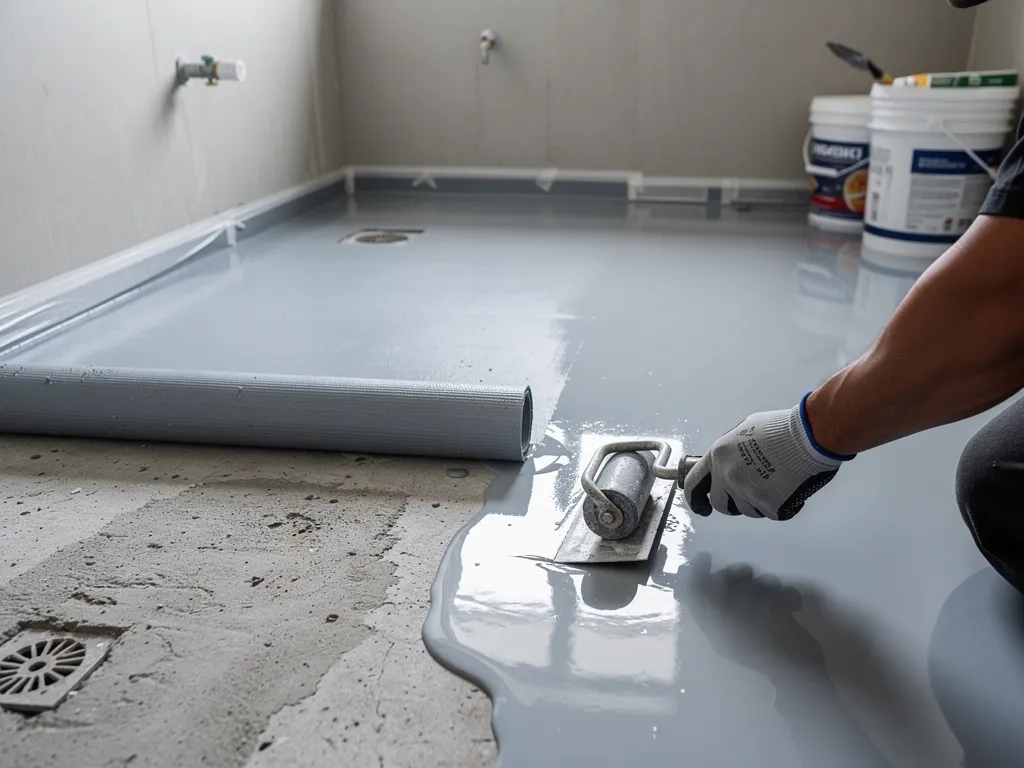
Standard GRA repairs replace the waterproofing membrane in the upper flat and skim coat, seal and repaint the ceiling below. HDB has also used faster methods such as overlay epoxy membranes and nanotechnology coatings, which can be completed in about a day instead of several days of hacking. Waiting times vary, so report the leak early.
Ready to Recreate Your Living Space? Book an appointment today! Get a Customised Estimate →
What to Do When Your Ceiling Leaks
- Document the damage with dated photos and videos.
- Talk to your upstairs neighbour. Many cases are resolved quickly with a friendly conversation.
- Report the leak to HDB through its feedback channels or your branch. For roof or common-area leaks, contact your Town Council.
- Allow access for inspection. HDB or a contractor may need to check both flats.
- Agree on the repair method and cost sharing before work starts.
- Engage an experienced contractor if you are carrying out the repairs privately.
When Neighbours Don’t Cooperate
If your neighbour refuses access or to share costs:
- Grassroots leaders can sometimes help bring both parties together.
- The Community Mediation Centre offers mediation to help neighbours reach an agreement.
- The Community Disputes Resolution Tribunals (CDRT) hear claims about unreasonable interference from neighbours, for claims up to $20,000. A pre-filing assessment is needed, and claims must be filed within two years.
- Legal advice is advisable for complex or high-value cases.
Spalling Concrete: A Related Problem
Spalling concrete happens when the steel bars inside the concrete rust and expand, pushing off the concrete cover. It often appears in humid bathrooms of older flats, alongside leaks. Signs include ceiling cracks, rust stains and falling concrete pieces.
- New flats are covered by HDB for spalling concrete for 10 years.
- In older flats under the Home Improvement Programme, essential repairs such as spalling concrete are among the works carried out.
- Outside these, owners generally arrange repairs, though HDB has stepped in to help vulnerable households in some cases.
Prevent spalling by improving bathroom ventilation, repainting ceilings regularly and sealing cracks early. Never ignore spalling: falling concrete is a safety hazard.
How to Prevent Leaks When You Renovate
If you are renovating, especially as the upstairs neighbour, protect yourself and others:
- Always re-waterproof when replacing bathroom or kitchen floor tiles
- Use pre-packed waterproofing screed and membrane, turned up at least 150mm at walls and pipes, as HDB requires
- Carry out a ponding test before tiling
- Replace old pipes during the renovation
Read our full guide to bathroom waterproofing in Singapore, plus our HDB toilet makeover essentials and HDB toilet upgrading mistakes.
Fix Leaks for Good With Han Yong
At Han Yong, we repair leaking bathrooms and kitchens with proper waterproofing, not quick patches. As an HDB-licensed contractor (licence no. HB-02-0289A) with over 10 years of experience, we apply for the required permits, carry out ponding tests and document every step.
Our four-step process of Consult, Propose, Develop and Reveal includes a Letter of Agreement with itemised costs and milestone payments. Explore our HDB toilet renovation and HDB renovation services, see our HDB renovation permit guide, or read about why experience and expertise matter when choosing a contractor.
Sign-up to our Four-Step Property Renovation Plan Today! Get a proper fix for your bathroom leak. Get a Customised Estimate →
Frequently Asked Questions
Who pays for a ceiling leak in an HDB flat?
If the leak is caused by wear and tear between floors, HDB’s Goodwill Repair Assistance covers 50% and the upper- and lower-floor owners split the other 50%. If the upstairs owner’s renovation caused it, that owner usually pays in full.
Does HDB cover ceiling leaks in new flats?
Yes. For new flats, HDB covers ceiling leaks in toilets and kitchens for five years. This warranty ends if the floor tiles are changed or the waterproofing system is tampered with.
What if my upstairs neighbour refuses to cooperate?
Try grassroots leaders or the Community Mediation Centre first. If that fails, you may be able to file a claim with the Community Disputes Resolution Tribunals for up to $20,000, or seek legal advice.
Who handles leaks in top-floor HDB flats?
Leaks in top-floor units usually come from the roof, which is common property. Report these to your Town Council.
Can a ceiling leak be fixed without hacking?
Sometimes. Overlay epoxy membranes and nanotechnology coatings applied in the upper flat can stop wear-and-tear leaks in about a day. Serious leaks may still need hacking and full re-waterproofing.
Is spalling concrete related to water seepage?
Often, yes. Moisture causes the steel bars in concrete to rust and expand, which cracks the concrete cover. HDB covers spalling concrete in new flats for 10 years.