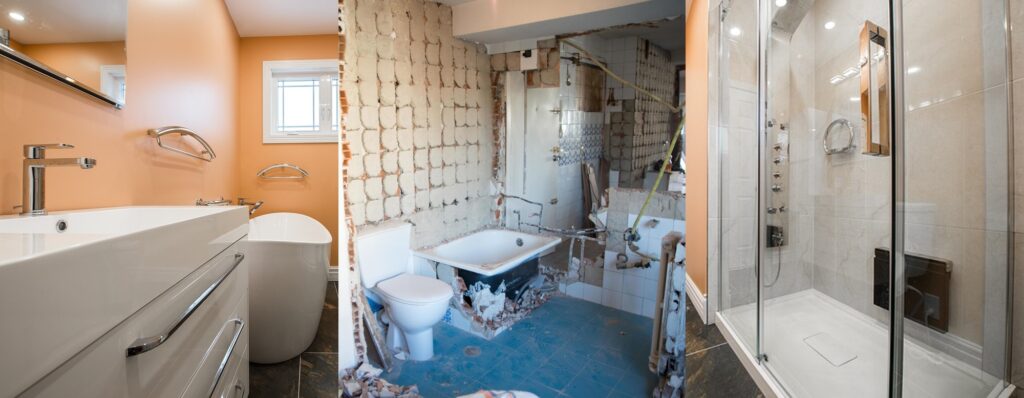
A leaking bathroom is one of the most stressful problems for any homeowner. Water stains appear on your downstairs neighbour’s ceiling, tiles start to pop and mould spreads. Fixing it often means dealing with neighbours, HDB and contractors at the same time.
The good news is that most bathroom leaks can be prevented with proper waterproofing during renovation. In this guide, the team at Han Yong explains why bathroom waterproofing in Singapore fails, the HDB rules you must follow and the repair options available.
How Bathroom Waterproofing Works
A bathroom floor is built in layers. On top of the concrete floor slab sits a waterproofing membrane, then a layer of cement screed shaped to slope towards the floor trap, and finally the tiles and grout. The membrane is the real barrier. Tiles and grout look waterproof, but water can still pass through cracks and joints over time.
For this system to work, the membrane must:
- Cover the whole floor without gaps
- Turn up the walls, kerbs and around pipes, so water cannot escape at the edges
- Be sealed properly around the floor trap and pipe penetrations
- Stay undamaged during tiling and later works
Common Causes of Waterproofing Failure
- Age: Waterproofing materials wear out over time. Ceiling leaks are more common in flats over 20 years old.
- Damaged membrane during renovation: Hacking tiles can tear the existing membrane if it is not replaced.
- Poor workmanship: Thin coats, missed corners or no turn-up at the walls.
- Cracked or missing grout: Water seeps through gaps between tiles into the screed.
- Poor floor falls: Water ponds instead of draining, soaking into grout and screed.
- Leaking pipes or floor traps: Failed seals around the floor trap or concealed pipes.
- Silicone gaps: Worn sealant around the shower screen, basin or WC base.
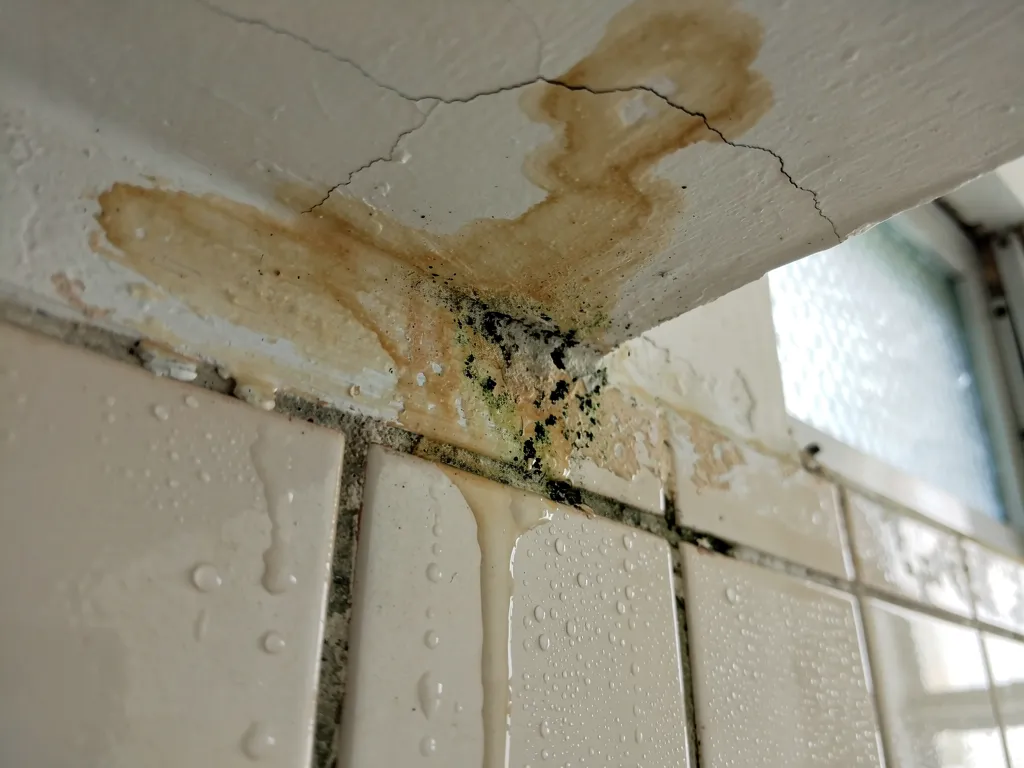
Signs to look out for include water stains on the ceiling below, damp skirting outside the bathroom, popping or hollow tiles, persistent mould and darkened grout.
HDB Waterproofing Rules You Must Follow
HDB has strict rules for bathroom works because leaks affect the flat below:
- The 3-year rule: In newly completed flats, original bathroom wall and floor finishes cannot be removed for the first three years. This protects the original waterproofing.
- Permit required: Replacing bathroom floor or wall finishes after that period needs an HDB permit.
- Pre-packed waterproofing screed and membrane must be used when bathroom floor finishes are replaced.
- 150mm turn-up: The waterproofing membrane must be turned up at least 150mm against the walls, kerbs and pipes.
- Floor thickness: Total floor finishes and screed must not exceed 50mm.
- Warranty: For new flats, HDB’s warranty for ceiling leaks in toilets and kitchens no longer applies if floor tiles are changed or the waterproofing is tampered with.
Read more in our HDB renovation permit guide and our list of HDB toilet upgrading mistakes.
The Ponding Test: Don’t Skip It
A ponding (or flood) test checks the membrane before tiles go on. The floor trap is plugged, the bathroom floor is filled with a few centimetres of water and left for a period, usually around 24 hours. The ceiling below is then checked for any sign of leakage.
Ask your contractor to:
- Let the membrane cure fully before testing. Many membranes need about 24 to 48 hours per coat.
- Carry out the test before screeding and tiling.
- Share photos of the membrane, the turn-ups and the ponding test as part of your project records.
Repair Options: With and Without Hacking
Non-hacking methods are faster and quieter, often finishing within a day, but they work best when the cause is minor and the tiles are sound. For leaks caused by failed membrane or damaged screed, hacking and redoing the waterproofing is the most reliable long-term fix.
How Much Does Bathroom Waterproofing Cost?
Typical 2026 market estimates for an HDB bathroom:
Non-hacking repairs like regrouting or overlay coatings usually cost less, but prices vary by bathroom size and severity. For your overall budget, see our HDB renovation cost guide.
Tips to Keep Your Bathroom Leak-Free
- Insist on a new membrane whenever floor tiles are replaced
- Make sure the floor slopes properly towards the floor trap
- Use quality grout, and consider epoxy grout in shower areas
- Re-seal silicone joints every few years
- Keep floor traps clear of hair and debris
- Ventilate well to reduce moisture and mould
- Fix small leaks early, before they damage the slab or the ceiling below
For more ideas, read our HDB toilet makeover essentials. If water is already leaking into your neighbour’s ceiling, see our guide to water seepage in HDB flats.
Waterproof Your Bathroom Properly With Han Yong
At Han Yong, we treat waterproofing as the foundation of every bathroom project. As an HDB-licensed contractor (licence no. HB-02-0289A) with more than 10 years of experience, we use HDB-compliant materials, carry out ponding tests and document each stage.
Our four-step process of Consult, Propose, Develop and Reveal includes a Letter of Agreement with itemised costs and milestone payments. See our HDB toilet renovation and HDB renovation projects, or learn more about our team.
Frequently Asked Questions
How long does bathroom waterproofing last?
A properly installed membrane can last many years, but waterproofing does wear out. Ceiling leaks are most common in flats more than 20 years old, and anything that damages the membrane, such as replacing tiles without re-waterproofing, shortens its life.
Can I fix a leaking bathroom without hacking?
Yes, for minor leaks. Overlay membranes, nanotechnology coatings, regrouting and injection can stop leaks through grout and joints. Serious leaks from a failed membrane or damaged screed usually need hacking and full re-waterproofing.
Do I need an HDB permit to redo bathroom waterproofing?
Yes. Replacing bathroom floor or wall finishes requires an HDB permit, and it is not allowed for the first three years after a new block is completed. Pre-packed waterproofing screed and membrane must be used.
What is a ponding test?
A ponding test checks the new membrane before tiling. The floor trap is plugged, water is left on the bathroom floor, usually for about 24 hours, and the ceiling below is checked for leaks.
How much does it cost to redo bathroom waterproofing?
In 2026, waterproofing and screed typically cost about $1,200 to $2,500 per bathroom. Including hacking, retiling and new fittings, a full hack-and-redo toilet renovation usually costs about $5,000 to $8,000.
Does changing my BTO bathroom tiles void HDB’s warranty?
Yes. For new flats, HDB’s warranty for ceiling leaks in toilets and kitchens ends if floor tiles are changed or the waterproofing system is tampered with.